


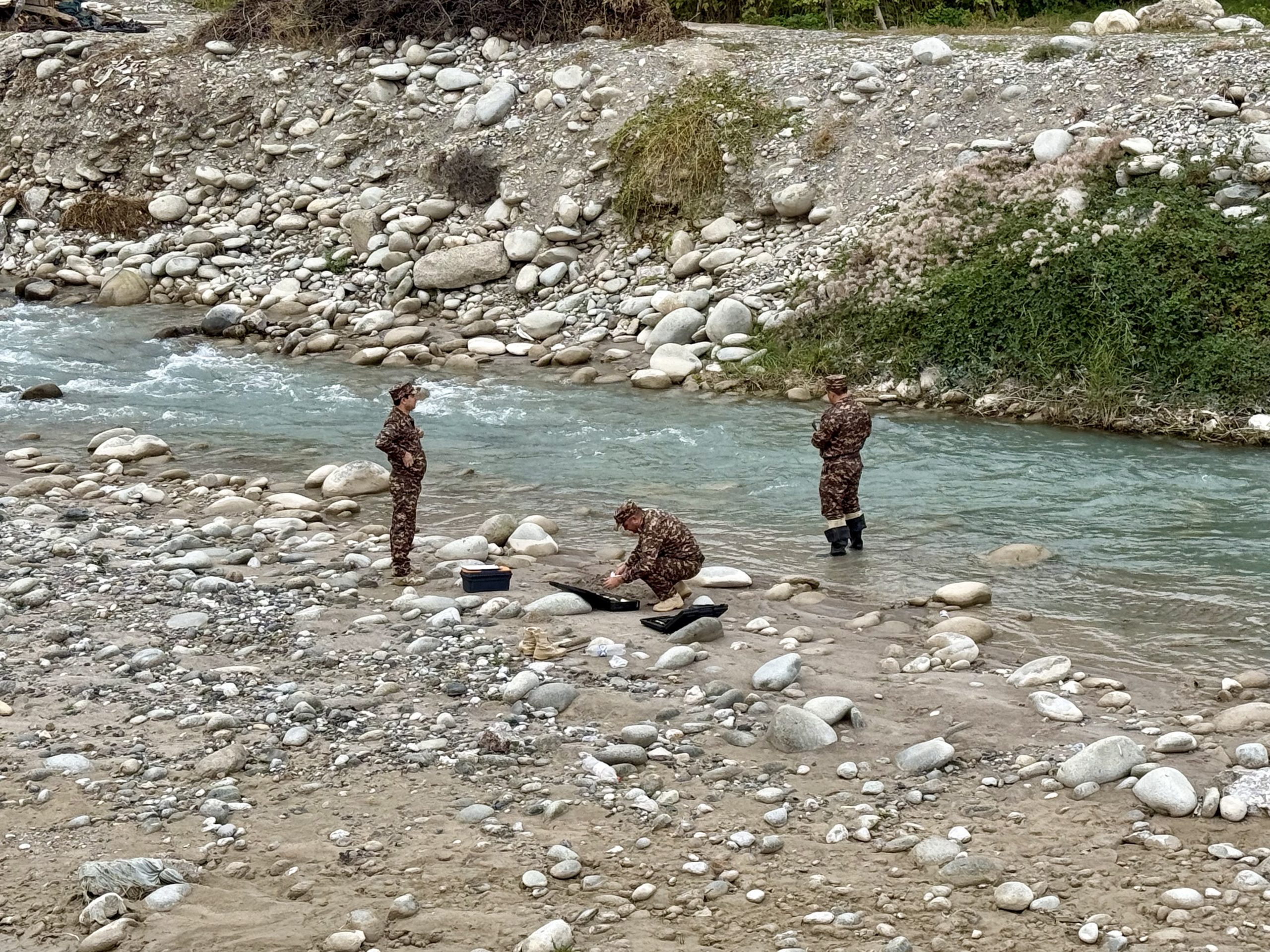
Work on water quality offers a practical basis for cooperation in the Syrdarya basin. In an update published on 27 October 2026, the OSCE Project Co-ordinator in Uzbekistan described support for monitoring transboundary watercourses together with the National Center for Environmental Monitoring.
What the specialists examine
Specialists collect surface-water and bottom-sediment samples and examine their chemical composition. The work is intended to assess possible pollution, including from upstream mining operations and industrial waste. Photographs accompanying the update show field sampling; the report does not specify the exact date when they were taken.
A shared river needs shared information
OSCE Project Co-ordinator Antti Karttunen said national partners work with colleagues in neighbouring countries and exchange monitoring data. In his assessment, this supports transparency and efforts to address shared environmental problems. Zafar Kayumov, the centre’s first deputy head, linked the cooperation to stronger environmental-analysis capabilities.
Regional work extends beyond one country: UNECE separately describes cooperation involving Kazakhstan, Kyrgyzstan, Tajikistan and Uzbekistan to prevent pollution in the Syr Darya basin. The new OSCE update concerns ongoing monitoring rather than a newly signed interstate agreement. It does not provide numerical laboratory results.
Photo: © OSCE. Water and sediment sampling in the Syrdarya basin. Published by the OSCE on 27 October 2026; the exact shooting date is not specified. Unmodified. OSCE · CC BY-ND 4.0.